






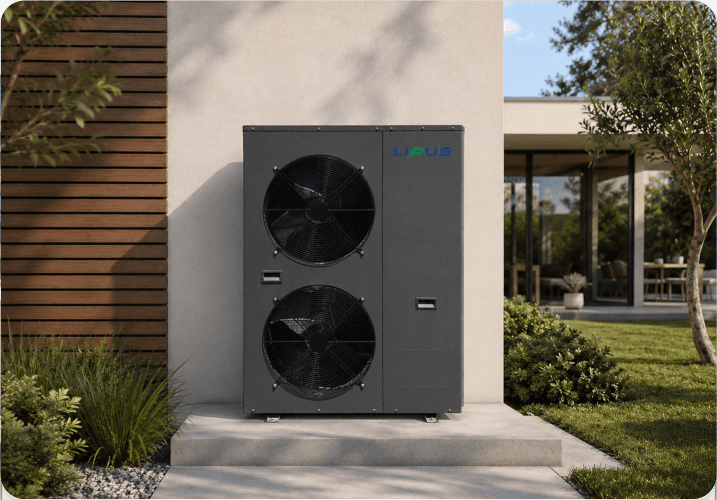
A heat pump is a highly efficient climate control system that heats, cools, and can produce hot water for living spaces by using the low-temperature energy found in outdoor air, ground, or water.
How Does a Heat Pump Work?
The system works by circulating refrigerant through a closed loop. The evaporator collects heat from the surroundings, the compressor raises the pressure and temperature of the refrigerant, and the condenser transfers the heat obtained to the building's heating system.
- Energy is absorbed from the surroundings
- The compressor raises the temperature
- Heat is transferred to the heating system
- The refrigerant re-enters the cycle
Advantages of a Heat Pump
- High energy efficiency
- Offering heating, cooling, and hot water in a single system
- Low operating cost
- Reducing fossil fuel use and carbon emissions
- Compatibility with underfloor heating and fan coil systems
Efficiency and Correct Capacity Selection
The efficiency obtained from a heat pump depends on the building's heat loss, climate zone, insulation level, and the heat distribution system used. For this reason, capacity selection must always be based on an engineering calculation.
Heat Pump for a Sustainable Future
When used together with renewable electricity sources, heat pumps significantly reduce the carbon footprint of buildings and become one of the core components of the Zero Carbon House approach.
← Back to all articles